Key takeaways
From January 1, 2027, the practical deadline for paying alcohol suppliers in California is the end of day 30.
The supplier must add 1 percent on day 32 and another 1 percent every 30 days after that, with cash-in-advance terms as the next step.
Assembly Bill 2375 (Rubio, Chapter 396, Statutes of 2026).
Update payables calendars, confirm when payments are received, and teach receiving staff to move paperwork quickly.
This article was written on November 24, 2026, the day the Department of Alcoholic Beverage Control issued its industry advisory on AB 2375. It describes the statute as enacted; the changes are not yet in force. It is general information, not legal advice.
The tied-house credit clock gets shorter
California’s tied-house credit law is about to get stricter. Starting January 1, 2027, an alcohol supplier that has not been paid by the end of the 30th day after delivery must charge the retailer 1 percent of the unpaid balance on the 32nd day, not the 43rd day as it does today. Another 1 percent follows for each 30 days after that. For bars, restaurants, caterers and event venues, about twelve days of slack disappear.
Table of Contents
The change comes from Assembly Bill 2375 (Rubio, Chapter 396, Statutes of 2026), which the Governor approved on September 20, 2026. AB 2375 amends Business and Professions Code section 25509, the credit statute, and section 25509.1, the electronic payment statute. ABC announced both changes in a single advisory on November 24, 2026. This article covers the credit and late-charge side. A companion article covers the electronic funds transfer rules.
Why California regulates supplier credit at all
Tied-house law is one of the foundations of California’s three-tier alcohol system. In its advisory, ABC explains that these laws “broadly prohibit alcohol suppliers from giving any money, gift, free good, or thing of value to a retailer unless expressly authorized by law,” and that they “promote fair competition and support an even playing field among licensed businesses.”
Credit is a thing of value. A favored bar allowed to pay ninety days late gets free money, and the distributor gains leverage over what it pours. The late charge is therefore mandatory, not a courtesy a sales rep can waive. Section 25509 permits a narrow, tightly defined credit arrangement and nothing more. Subdivision (f) of the amended section says the Legislature intends “to remove the retailer from financial or business obligations to suppliers,” and that the exception “shall be limited to its express terms so as not to undermine the general prohibition.”
Today's rule versus the 2027 rule
ABC summarizes current law this way: payment is due within 30 days from the date of delivery, and if payment is not received by the expiration of the 42nd day, the supplier must charge 1 percent of the unpaid balance, plus another 1 percent for each 30-day period after that until payment is received. In practice, that meant an account could run past its due date for close to two weeks before the first charge landed.
Under the amended section 25509(b), a supplier that sold and delivered beer, wine or distilled spirits to a licensed retailer, and that did not receive payment “by the expiration of the 30th day from date of delivery,” shall charge the retailer 1 percent of the unpaid balance “on the 32nd day from date of delivery and an additional 1 percent for each 30 days thereafter.” ABC’s FAQ puts it plainly: beginning January 1, 2027, the supplier must assess the charge on the 32nd day following delivery if payment has not been received within the payment period, with another 1 percent for each successive 30-day period the balance stays unpaid.
Who counts as a supplier
AB 2375 puts a definition at the top of section 25509. For this section, “supplier” means a distilled spirits manufacturer, a brandy manufacturer, a beer manufacturer, a winegrower, a wine blender, a distilled spirits rectifier, a wine rectifier, a distilled spirits wholesaler, or a beer and wine wholesaler licensed under the Alcoholic Beverage Control Act.
The list is broader than the companies most operators think of as distributors. A brewery that self-distributes kegs to your taproom accounts, a winery that sells directly to your restaurant, and a craft distillery that delivers to your bar are all covered, along with the large wholesale houses. The credit clock applies to every one of those invoices. This is different from the electronic payment rule in section 25509.1, which governs payments from licensed retailers to licensed wholesalers. ABC’s FAQ notes that section 25509.1 does not apply to deliveries occurring solely under a manufacturer license type. So a winery invoice might not have to be paid by EFT, but it is still subject to the day-32 late charge.

How the days are counted
Section 25509(d) says the 30-day periods “shall commence with the day immediately following the date of invoice and shall include all successive days including Sundays and holidays to and including the 30th day.” When the 30th day, or the end of any later 30-day period, falls on a Saturday, Sunday or legal holiday, “the next business day shall be deemed to be the expiration day.”
Notice that subdivision (b) speaks of the date of delivery, while subdivision (d) starts the count the day after the date of invoice. For most beverage deliveries, the invoice is dated and handed over at delivery, so the two dates are the same. If your supplier invoices separately or later, ask how its system dates the invoice and which date it uses to run the clock.
A simple example: a case delivery and invoice dated March 1 starts the count on March 2. Day 30 is March 31. If the balance is still unpaid at the end of that day, the 1 percent charge applies on the 32nd day. If March 31 fell on a weekend or holiday, the expiration day would move to the next business day.
What else section 25509 requires
The amended section contains other rules that affect how a venue pays suppliers.
Under subdivision (c), a supplier that has not received payment in full by the expiration of the 30th day, or that has not received payment of the 1 percent charge within 30 days after the charge became due, must thereafter sell to that retailer only by receiving payment in advance of delivery. That continues until all payments are received for product delivered more than 30 days earlier. For a busy venue, that means paying before the truck unloads.
Subdivision (e) requires money received from a retailer for beer, wine or spirits to be applied first to the oldest balance. You cannot direct a payment to this week’s invoice while an older one stays open.
Checks received as payment must be deposited for collection no later than the second business day after receipt. A promissory note, a postdated check, or a check dishonored on presentation is not payment.
What this means for the people who pay the bills
Owners, controllers and bookkeepers are the first line. A few practical adjustments will cover most operations:
If supplier records are set to “net 42” or carry a grace period, change them so alcohol invoices are scheduled to be paid well before day 30, leaving time for weekends, holidays and bank processing.
Beverage invoices from licensed suppliers should sit in their own queue with the statutory deadline attached.
The credit statute asks whether the supplier received payment. For wholesalers, the companion electronic payment rule says the EFT must be received no later than the end of the 30th day. Sending money on day 30 may not be enough.
If a 1 percent charge appears, reconcile it promptly and pay it. Leaving the charge unpaid for 30 days after it falls due is itself a trigger for cash-in-advance terms under subdivision (c).

What managers and receiving staff should know
The people who sign for deliveries create the paper trail the payment clock depends on. A short briefing for managers, bar leads and receiving staff should cover:
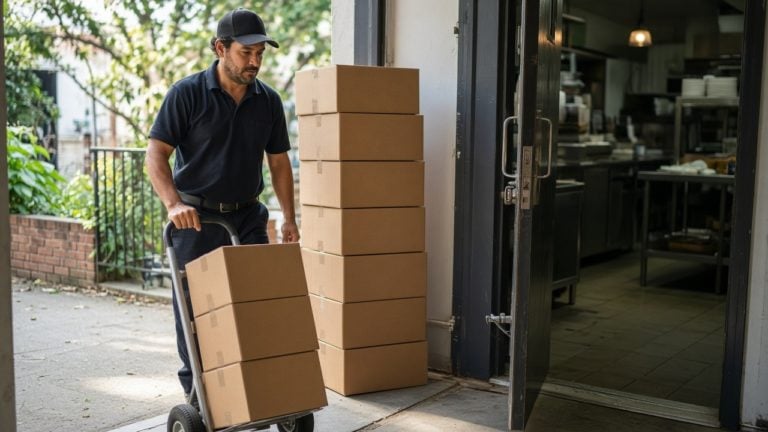
Count cases and kegs, note shortages or damage on the ticket, and get the driver’s acknowledgment before signing.
An invoice that sits in a bar drawer for a week shrinks the time the office has to pay it.
If the invoice date and the actual delivery date differ, note it. That record helps if there is ever a question about when the clock started.
Drivers and sales reps cannot grant extended credit, waive late charges, or take a postdated check. Route any payment question to the owner or office.
Event teams and caterers should name one person to receive alcohol deliveries at each site and return the signed paperwork promptly.
Where responsible operations fit
Tied-house credit rules are licensee and supplier law. They are not the focus of responsible beverage service certification, which centers on how alcohol is served to patrons. It would overstate things to say that a late payment is an RBS problem.
The link is in how well-run venues operate. The habits that keep a bar compliant on the floor, such as clear procedures, written records, trained staff and a manager who knows the rules, also keep it compliant at the receiving door and in the office. The Legislative Counsel’s Digest notes that AB 2375 expands the scope of an existing crime, so this is not a rule to treat casually.
Questions operators ask
AB 2375 takes effect January 1, 2027. Neither the bill text nor ABC’s advisory spells out how deliveries made in late December 2026 are treated when their payment window runs into January. If you have open invoices crossing that date, ask your suppliers how they will apply the charge, or pay those invoices by day 30 and avoid the question.
No. The legislative findings in section 25509(f) say the credit exception is limited to its express terms. Extended credit beyond the statute is exactly what the law is designed to prevent.
Beyond sections 25509 and 25509.1, the bill also amended section 23006, the definition of “beer,” to include beer produced using other grain and to specify fermentation in drinkable water. ABC’s November 24 advisory focuses on the credit and payment changes.
Related reading
See our articles on AB 2991 electronic payments and ABC’s tied-house reminder on supplier payments.
The bottom line
From January 1, 2027, the practical deadline for paying alcohol suppliers in California is the end of day 30. Miss it, and the supplier must add 1 percent on day 32 and another 1 percent every 30 days after that, with cash-in-advance terms as the next step. Update payables calendars, confirm when payments are received, teach receiving staff to move paperwork quickly, and treat supplier credit as part of running a compliant licensed business.
Sources
- AB 2375 (Rubio, Chapter 396, Statutes of 2026), bill text
- ABC Industry Advisory: Changes to Tied-House Credit and Electronic Payment Laws (Nov. 24, 2026), including FAQ
- Business and Professions Code section 25509 (current text; amended text effective Jan. 1, 2027 appears in AB 2375)
- ABC Industry Advisory: Tied House Reminder: Payments Between Retailers and Suppliers (Nov. 5, 2025)
This article is general information, not legal advice.